[INFO] $ cat ./index
Deep-tech explainers for people who read the paper.
Diffusion, garment-aware conditioning, drape solvers and the maths underneath the demos. No product announcements, no funding rounds, no takes.
// recent
View all articles →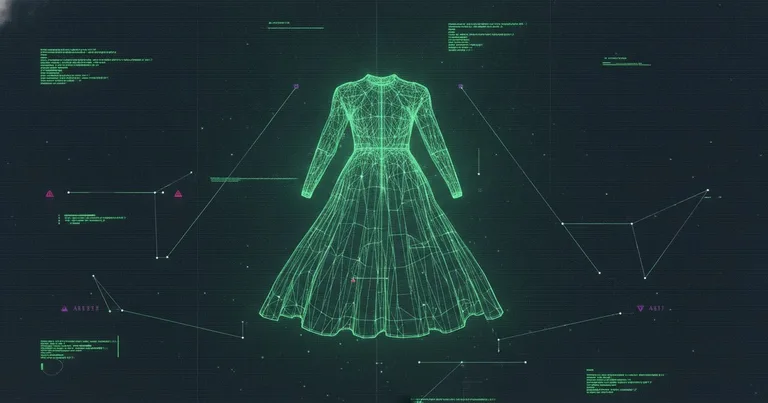
6 Data Structures Fashion AI Platforms Use to Represent a Garment
A technical breakdown of the six internal data representations—from panel graphs to attribute trees—that power modern fashion AI and 3D simulation platforms.
Read →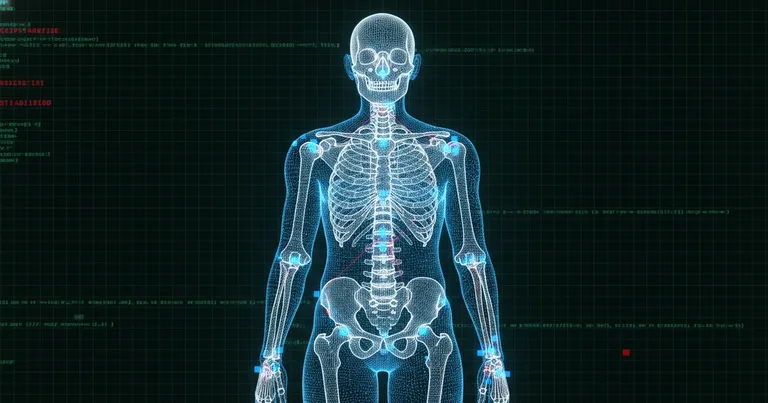
Pose Estimation Pipelines for Virtual Try-On: Keypoint to Warping
A deep-tech walkthrough of the computer vision architectures that drive image-based virtual try-on, from human pose keypoints to geometric garment warping.
Read →
Latent Space Structure in Fashion Image Generation Models
A fashion image generator has more than one latent space, and only one of them is spatial. What each encodes, how interpolation and masked editing expose the structure, and why texture, trims and layers break.
Read →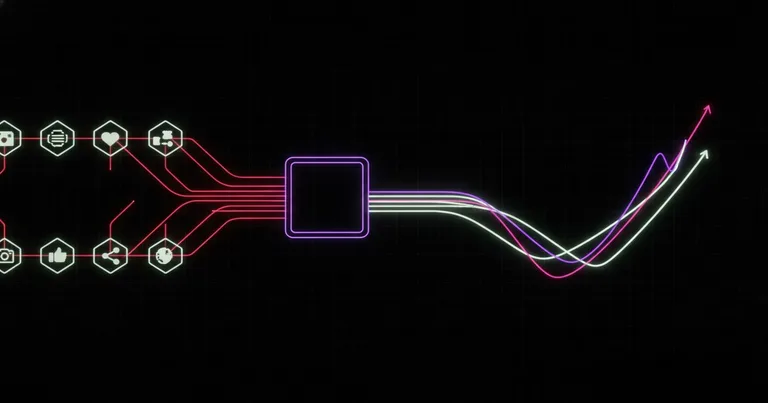
How Trend Signal Aggregation Works Inside a Fashion AI Platform
An engineering-first breakdown of the data pipelines that convert millions of social images into quantified, actionable fashion trend scores.
Read →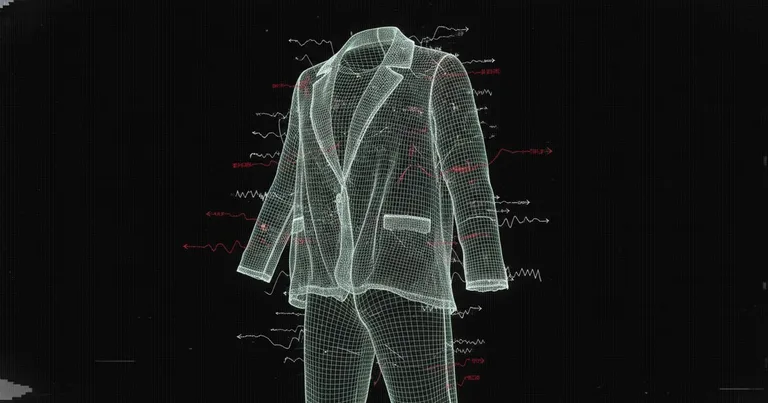
How Fabric Physics Parameters Map to Simulation Solver Inputs
A deep-tech analysis of how physical textile measurements—bending stiffness, shear modulus, and surface friction—are translated into numeric constraints for position-based dynamics solvers.
Read →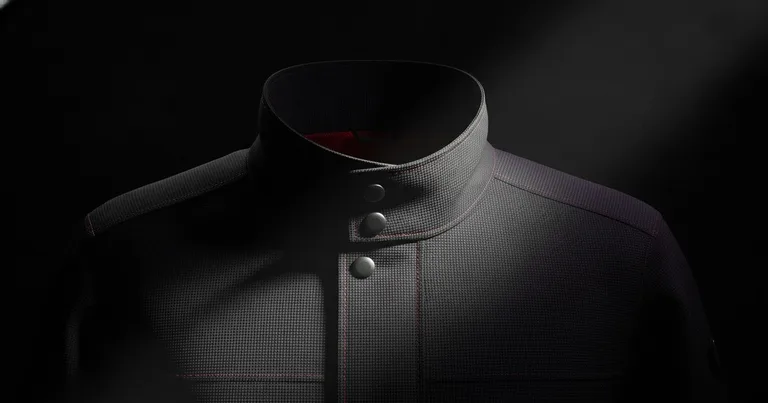
Attention Mechanisms in Fashion Attribute Tagging: How They Work
Attention weights are computed over image tokens, not pixels. What that means for garment attribute tagging: per-attribute queries, the patch-grid ceiling on texture and trims, and why layered outfits need segmentation first.
Read →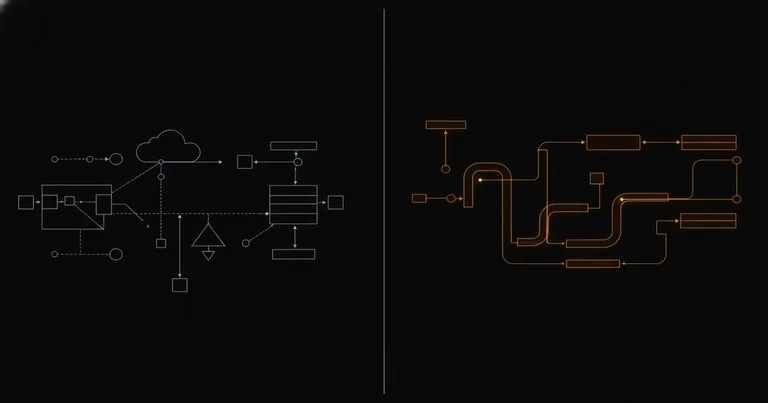
Azure OpenAI vs. Databricks for Fashion AI Platform Infrastructure
Platform architects at fashion groups face a real fork: Azure OpenAI for managed model serving inside the Microsoft ecosystem, or Databricks for a unified data-and-AI lakehouse. Here is what each choice actually means in production.
Read →
Free resources
All resources →Paper to brief — a fashion-AI research paper on one page, with the caveats
A step-by-step workflow that turns a research paper about AI in fashion — full text, abstract or the text of a preprint page — into a one-page brief: what problem, method in plain words, data used, results with their caveats, what it means for a fashion team, questions to ask the authors, and how confident the brief is given what was read. Every number as printed, TBC where the paper is silent, no benchmark the paper does not name; it also checks briefs written by others and compares several papers on one table. Runs in Claude, ChatGPT, Gemini and Claude Code, with an experimental n8n workflow that briefs a feed of abstracts on a schedule.
Get the kit →Model card interrogator — turn vendor docs into answers, gaps and follow-up questions
A skill that reads a fashion AI vendor's model card, documentation, sales deck or terms and answers a fixed 25-question set — training data provenance, evaluation, fine-tuning, data retention, failure modes, human review, IP and licensing — from that material only. Every answer is quoted with its source, silences become not-answered findings, contradictions between deck and terms are called out, and the follow-up questions are ones a vendor can answer with a document. Also compares two vendors on one table and writes the one-page note for procurement. Runs in Claude, ChatGPT, Gemini and Claude Code.
Get the kit →
// faq
Do you cover product launches?
No. If a company ships something with a technical paper attached, we read the paper. If it ships with a press release, we wait.
What level do you write at?
Assume comfort with linear algebra and basic deep learning. We do not re-explain backpropagation. We do explain anything specific to garments, because most ML readers have no pattern-making background.
Can I republish?
Yes, CC BY 4.0, with a link back and no modification to technical claims. Corrections are logged publicly with a diff.
What we cover
About AIFashion.tech
Deep-tech explainers: generative design, computer vision, model architecture for fashion, garment-geometry-driven visuals, self-learning systems, tenant isolation.
More about this publication →// subscribe
Plain-text email. One explainer at a time, sent when it is finished, not on a schedule.
no tracking pixels · unsubscribe header included