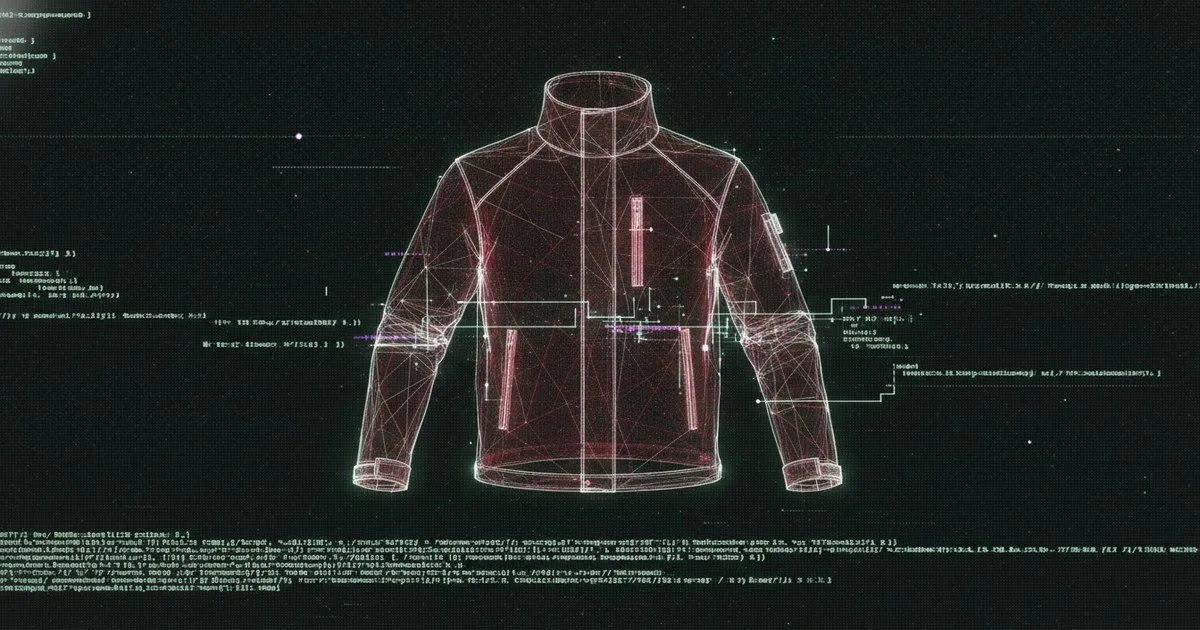
Real-time 3D rendering in fashion production environments shifts the computational load from offline ray-tracing to GPU-accelerated rasterization or path-tracing. This technical transition enables interactive configurators, virtual showrooms, and real-time try-on experiences that respond to user input without the latency of traditional rendering farms. You select these tools based on the specific balance required between visual fidelity (PBR material accuracy) and runtime performance across target devices.
Key takeaways
- Latency is the primary architectural constraint when deploying real-time garment rendering to browser-based environments.
- High-fidelity production workflows increasingly rely on game engines to handle complex fabric shaders and dynamic lighting.
- Automated optimization pipelines are required to convert heavy CAD geometry into runtime-ready assets.
- Physics-based simulation is moving from the design studio to the consumer-facing frontend via specialized plugins.
- The choice of rendering engine dictates the interoperability of your 3D asset pipeline across the supply chain.
Why is real-time rendering replacing traditional offline rendering in fashion?
Offline rendering, while capable of extreme photorealism, fails in production scenarios requiring user agency. If your platform allows a customer to change a garment’s color, texture, or fit in real-time, you cannot rely on pre-rendered image sequences. Real-time engines compute frames in milliseconds, allowing for dynamic lighting changes and interactive camera movements. This is critical for brands like Arc'teryx, which require technical accuracy in their digital representations of outdoor equipment.
As e-commerce platforms evolve, the demand for interactivity grows. For instance, AliExpress reported on August 17, 2026 that it is simplifying refund processes and reinforcing service standards, a move that aligns with the broader industry push toward reducing returns through better pre-purchase visualization. Real-time 3D tools provide the visual certainty needed to meet these rising consumer expectations.
Which tools currently support real-time 3D garment visualization?
1. Unreal Engine
Unreal Engine serves as the high-performance benchmark for real-time fashion visualization, utilizing its Lumen global illumination and Nanite virtualized geometry systems. You deploy this engine when your production target involves high-end virtual showrooms or immersive retail experiences that require cinematic-quality lighting and complex fabric physics.
- → Supports real-time ray tracing and advanced PBR material workflows.
- → Nanite allows for massive polygon counts without traditional LOD overhead.
- → Extensive plugin ecosystem for garment simulation and avatar integration.
This engine relates to fashion workflows by providing the rendering backbone for ultra-high-fidelity digital twins. It allows designers to see how garments interact with light and movement in a fully simulated environment before physical prototyping begins.
Best for: High-fidelity virtual showrooms and immersive, workstation-based retail experiences. Limits: High hardware requirements for end-users and a steep learning curve for non-technical teams.
2. Vntana
Vntana is a 3D asset management and optimization platform that automates the conversion of heavy manufacturing files into lightweight, real-time-ready assets. It acts as the bridge between design CAD and production-grade web or AR environments, ensuring that garments maintain visual integrity while minimizing file size.
- → Automated mesh decimation and texture compression for web-based delivery.
- → Built-in viewer with support for AR and real-time interactive configurators.
- → Centralized DAM (Digital Asset Management) for 3D versions and metadata.
In a fashion workflow, Vntana solves the bottleneck of manual asset optimization. It allows your technical team to upload high-poly patterns and receive optimized glTF or USDZ files that run smoothly on mobile browsers.
Best for: Automated 3D asset optimization for web-based e-commerce and augmented reality. Limits: Focuses on the delivery and optimization layer rather than original garment creation.
3. Browzwear
Browzwear, which remains an independent entity as of August 17, 2026, provides the VStitcher platform for 3D digital product creation. Its real-time viewport allows designers to validate fit and drape using physics-based simulation, directly linking the 3D visual to the underlying 2D pattern.
- → Real-time physics engine for accurate garment drape and tension mapping.
- → Integration with PLM systems for end-to-end production data management.
- → Photorealistic rendering engine for high-quality marketing asset generation.
Browzwear is central to the design-to-manufacturing workflow. By using its real-time simulation, brands reduce the need for physical samples, as the 3D garment is a true representation of the production-ready pattern.
Best for: Physics-based 3D sampling, fit validation, and technical garment development. Limits: Real-time interactivity is primarily optimized for the design environment rather than consumer-facing web apps.
4. Marvelous Designer
Now part of CLO Virtual Fashion, Marvelous Designer is the industry standard for creating high-fidelity digital clothing with complex folds and realistic fabric behavior. Its real-time simulation engine allows for rapid iteration of garment shapes on moving avatars.
- → Pattern-based design workflow that mirrors traditional garment construction.
- → High-speed cloth simulation for dynamic animations and still renders.
- → Comprehensive library of fabric presets with adjustable physical properties.
For production teams, Marvelous Designer is the go-to tool for creating the initial 3D assets that will eventually be exported to engines like Unreal. It excels in capturing the nuance of fabric movement which is essential for high-end digital fashion.
Best for: High-fidelity garment simulation and the creation of complex digital fashion assets. Limits: Primarily a creation tool; requires external rendering engines for large-scale production deployment.
5. Optitex
Operated as an independent business within FOG Software Group, Optitex integrates 2D pattern CAD with 3D visualization. Its real-time 3D environment allows for the immediate visualization of pattern changes, ensuring that the digital model and the physical product remain synchronized.
- → Simultaneous 2D pattern drafting and 3D garment visualization.
- → Virtual tension and pressure maps to analyze garment fit on various avatars.
- → Support for 3D nesting and marker making to optimize fabric utilization.
Optitex is utilized in production environments where technical precision is paramount. The real-time feedback loop between the pattern and the 3D model ensures that any design adjustment is immediately checked for manufacturing feasibility.
Best for: Integrated 2D/3D CAD workflows and technical apparel manufacturing. Limits: Visualization capabilities are secondary to technical accuracy and pattern grading.
6. Zeekit
Operating as part of Walmart, Zeekit provides a virtual try-on platform that utilizes real-time image processing and AI to map garments onto user-uploaded photos or selected models. It focuses on the consumer-facing production environment, specifically for mass-market retail.
- → Real-time mapping of 2D garment images onto 3D body representations.
- → Scalable architecture for high-volume e-commerce traffic.
- → Integration into mobile shopping apps for interactive user experiences.
Zeekit’s role in the fashion ecosystem is to solve the "fit uncertainty" problem at the point of sale. By providing a real-time visualization of how a garment looks on a body, it bridges the gap between static product photos and the physical fitting room.
Best for: High-volume virtual try-on and interactive consumer-facing retail applications. Limits: Proprietary technology stack that is largely integrated into the Walmart ecosystem.
7. Swatchbook
As part of the CLO Virtual Fashion ecosystem, Swatchbook is a cloud-based platform for digital material management. It provides real-time visualization of fabric textures, colors, and physical properties, allowing designers to swap materials on 3D models instantly.
- → High-resolution 3D material visualization with accurate PBR properties.
- → Centralized marketplace for sourcing digital materials from global suppliers.
- → Seamless integration with major 3D design tools for consistent material rendering.
Swatchbook streamlines the sourcing phase of production. Instead of waiting for physical swatches, your team can visualize thousands of materials in real-time on your existing 3D garment assets, accelerating the design approval process.
Best for: Digital material management and high-resolution real-time fabric visualization. Limits: Restricted to material-level visualization rather than full garment construction or simulation.
8. The New Black
The New Black is an AI-driven fashion design platform that enables the generation of 3D garments and virtual try-ons through generative models. It represents a shift toward AI-assisted real-time design, where text or image prompts are converted into visual garment representations.
- → Rapid generation of garment concepts and 3D visualizations from AI prompts.
- → Built-in tools for creating virtual models and try-on environments.
- → Streamlined workspace for going from initial concept to 3D asset.
This platform is used in the early production stages to explore design variations at a speed impossible with traditional CAD. It allows for the rapid prototyping of visual ideas before they are committed to technical pattern-making. FIT and PixaScale notably won the 3D Retail Coalition contest in October 2025 for using similar 3D tech and AI to create custom garments, highlighting the growth of this sector.
Best for: Rapid generative design and AI-assisted 3D garment prototyping. Limits: Newer technology with less established integration into traditional manufacturing CAD suites.
How do you manage the latency-fidelity tradeoff in production?
Managing real-time 3D performance requires a tiered approach to asset complexity. For web-based configurators, you must prioritize mesh optimization and texture atlasing to keep initial load times under three seconds. This often involves using tools like Vntana to reduce polygon counts by up to 90% while maintaining visual silhouettes through baked normal maps.
| Tool | Rendering Engine | Best For | Latency Tradeoff |
|---|---|---|---|
| Unreal Engine | Unreal (Lumen/Nanite) | Virtual Showrooms | High (Requires GPU) |
| Vntana | WebGL / Proprietary | Web Configurators | Low (Optimized for Web) |
| Browzwear | V-Ray / Real-time | Technical Sampling | Moderate (Design-focused) |
| Zeekit | Image-to-3D AI | Virtual Try-on | Low (Mobile Optimized) |
| The New Black | Generative AI | Rapid Prototyping | Low (Cloud-rendered) |
FAQ
How do you optimize 3D garments for web-based real-time rendering?
Optimization involves mesh decimation, where the polygon count is reduced while preserving the garment's silhouette. You also use texture baking to transfer high-resolution details from a manufacturing-level CAD model onto a low-poly real-time mesh. Tools like Vntana automate this process, converting heavy assets into glTF or GLB formats suitable for browser-based viewers.
What is the difference between rasterization and ray-tracing in fashion tools?
Rasterization, used by most real-time engines, converts 3D objects into 2D pixels quickly, making it ideal for interactive apps. Ray-tracing simulates the physical behavior of light, providing extreme photorealism but at a high computational cost. Modern tools like Unreal Engine use hybrid approaches to provide ray-traced effects in real-time environments.
Can CAD patterns be used directly in real-time engines?
Not directly. Manufacturing CAD files (like DXF or heavy 3D meshes from Optitex) are too dense for real-time engines. They must be exported as intermediate formats like OBJ or FBX and then optimized. However, platforms like Browzwear and Marvelous Designer provide viewports that simulate these patterns in real-time within their own proprietary environments.
Which tool is best for high-volume virtual try-on?
For mass-market retail where millions of users need to see garments on different body types, Zeekit (owned by Walmart) is a leading choice. It uses real-time image processing rather than full physics-based simulation for every user, which allows it to scale effectively across web and mobile platforms without requiring high-end user hardware.
Further reading
- New Uses of 3D Tech and AI in the Fashion Industry
- The New Black AI Fashion Design Platform
- AliExpress Enhancements to Shopping Experience