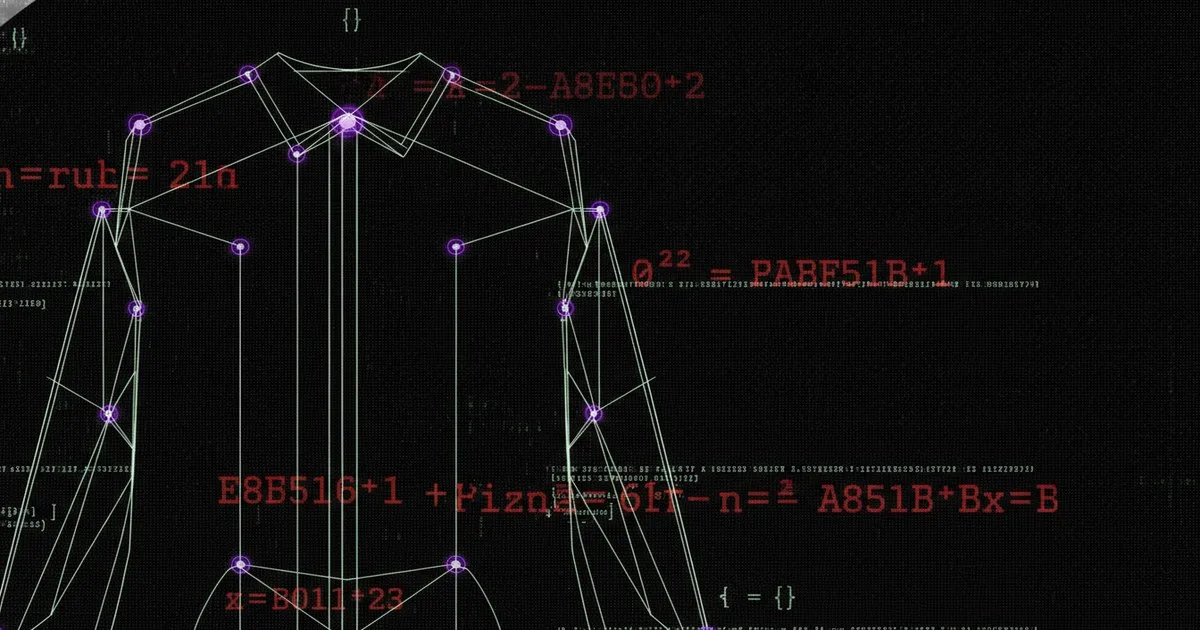
Engineering automated garment production requires moving beyond manual drafting toward parametric geometry and standardized data exchange. Open-source pattern drafting tools provide the necessary APIs and file transparency for developers to build custom automation layers, integrate with Product Lifecycle Management (PLM) systems, and execute mass-customization at scale. By leveraging these tools, engineers can treat garment patterns as code—version-controlled, variable-driven, and production-ready.
Key takeaways
- Parametric modeling allows for instant pattern grading based on variable input data.
- Standardized DXF/AAMA formats are essential for interoperability between open-source and industrial CAD environments.
- Blender's geometry nodes and Python API provide a robust framework for 3D garment simulation and visualization.
- Data privacy remains a critical concern as AI-driven hyper-personalization tools enter the pattern-making workflow.
- Open-source tools offer the transparency required for building custom enterprise integration layers.
What is the current state of open-source pattern drafting for engineers?
The shift from traditional 2D drafting to digital-first engineering is driven by the need for interoperability. Modern system architecture in advanced fashion design often consists of five main components, including digital design software and texture mapping modules, as established in research from January 2026. For engineers, the priority is not just the visual output but the underlying data structure—ensuring that a pattern generated in a parametric environment can be successfully parsed by a CNC cutter or a digital sewing room.
1. Seamly2D
Seamly2D is an open-source parametric 2D pattern drafting application specifically designed for pattern makers who need to create and modify garment patterns through mathematical variables. Unlike standard vector software, it uses a parametric engine where every point and curve is defined by a formula, allowing for automatic resizing when measurement files are updated.
- → Parametric drafting engine that recalculates geometry based on measurement changes.
- → Native support for multi-size grading through external measurement files (.vit).
- → Exports to production-ready formats including PDF and SVG.
For engineers, Seamly2D is valuable because its file format (.val) is XML-based. This allows for programmatic manipulation of pattern geometry. You can write scripts to inject new measurement values into the XML and trigger the application to output updated pattern files, making it a core component for automated made-to-measure services.
Best for: Small studios and engineers building parametric pattern libraries. Limits: Does not include native 3D simulation or advanced nesting features.
2. Blender
Blender is a free and open-source 3D creation suite that has become a staple in fashion engineering for simulation and visualization. While not a traditional 2D drafting tool, its version 5.2 LTS development focus on physics, memory efficiency, and geometry nodes makes it a powerful engine for cloth simulation and 3D avatar fitting.
- → Advanced cloth physics engine for simulating fabric drape and tension.
- → Geometry Nodes for procedural garment creation and non-destructive modeling.
- → Robust Python API (bpy) for automating renders and vertex-level manipulations.
Engineers use Blender to bridge the gap between 2D patterns and 3D visualization. By importing 2D patterns as SVG files, you can use Blender's simulation tools to verify the fit on a digital avatar before physical sampling. The ability to automate these simulations via Python allows for large-scale virtual try-on testing without manual intervention.
Best for: Visualizing garment physics and creating high-fidelity 3D renders. Limits: High complexity for users focused solely on 2D production drafting.
3. TUKAcad
TUKAcad is a professional CAD suite that, while proprietary, is a critical mention for engineers working on hybrid open-source/industrial pipelines. It provides the high-level grading, marker making, and material requirement planning (MRP) tools that are often the target for open-source integration.
- → TUKA APM for automatic pattern making and grading from a spec sheet.
- → SMARTmark for optimized fabric nesting and material efficiency.
- → TUKAcloud for web-based digital sample room management and collaboration.
In an engineering workflow, TUKAcad often serves as the production endpoint. An engineer might generate a base pattern using an open-source parametric tool and then pipe that data into TUKAcad for industrial grading and marker making. Its ability to handle complex DXF/AAMA files makes it the standard for ensuring that digital designs can be manufactured at scale.
Best for: Enterprise-grade production, grading, and marker making. Limits: Requires a proprietary license and has a steeper cost of entry than open-source alternatives.
4. Python-Based Geometry Frameworks
For engineers who prefer a "headless" approach, using Python-based geometry libraries to build custom pattern engines is a common strategy. These frameworks allow you to define garment geometry using coordinate geometry and Bezier curve mathematics, bypassing the GUI entirely for maximum automation.
- → Direct control over vertex data and seam allowance logic.
- → Integration with machine learning libraries for predictive sizing.
- → Scalable execution in cloud environments for mass customization.
By treating a pattern as a series of geometric constraints, you can build systems that generate production-ready files based on 3D body scans or user-submitted measurements. This approach is essential for companies looking to build proprietary automation tools that do not rely on the UI limitations of existing CAD software.
Best for: Developers building custom, automated mass-customization platforms. Limits: Requires significant engineering resources to build and maintain the geometry engine.
5. DXF/AAMA Standard Parsers
The final "tool" in an engineer's kit is a robust understanding and implementation of the DXF/AAMA (American Apparel Producers Association) standard. This is the industry-standard format for exchanging pattern data between different CAD and CAM (Computer-Aided Manufacturing) systems.
- → Ensures interoperability between open-source tools and industrial hardware.
- → Handles complex data like grade rules, notches, and grain lines.
- → Facilitates the transition from digital design to physical cutting.
Engineering a reliable parser for these files is non-trivial due to the various ways different vendors implement the standard. However, mastering this data structure is what allows an open-source workflow to interact with the broader fashion manufacturing ecosystem. Without a solid DXF/AAMA pipeline, even the most advanced parametric pattern remains trapped in its native environment.
Best for: Ensuring system-wide interoperability and production readiness. Limits: The DXF standard is often inconsistently implemented across different software vendors.
How do engineers integrate these tools into a production pipeline?
Integration starts with data normalization. Most engineering workflows begin by defining a "master pattern" in a parametric tool like Seamly2D. This pattern is then exported as an SVG or DXF file. From there, the data can be processed by custom scripts to apply grading rules or injected into a simulation environment like Blender to check for fit issues.
As these digital solutions drive innovation, they also introduce meaningful data privacy and litigation risks, particularly when handling sensitive consumer measurement data, as noted in reports from June 2026. Engineers must ensure that any automated pipeline includes robust data encryption and adheres to global privacy standards, especially when integrating AI-driven hyper-personalization features.
| Tool | Best for | Limits |
|---|---|---|
| Seamly2D | Parametric 2D drafting | No native 3D simulation |
| Blender | 3D simulation and rendering | High complexity for 2D-only workflows |
| TUKAcad | Professional grading and production | Proprietary license required |
| Python Scripts | Custom automation engines | High engineering overhead |
| DXF Parsers | System interoperability | Standard fragmentation across vendors |
FAQ
How can I automate pattern resizing for different body types?
Automated resizing is best achieved through parametric modeling. Tools like Seamly2D allow you to define pattern points using variables linked to a measurement file. When the measurement values change, the geometry of the pattern updates automatically, maintaining the original design intent across different sizes.
Which file format is best for sharing patterns between different CAD systems?
DXF/AAMA (or DXF/ASTM) is the industry standard for pattern exchange. It includes specific layers for cut lines, sew lines, notches, and grading information. While SVG is useful for web visualization, DXF/AAMA is required for most industrial cutting machines and professional CAD software.
Can Blender be used to create production-ready 2D patterns?
While Blender is primarily a 3D tool, it can be used for 2D drafting by working on a single plane and using specialized plugins for exporting to SVG or DXF. However, it lacks the native garment-specific tools found in Seamly2D or TUKAcad, such as automatic seam allowance and notch placement.
What are the main technical risks when building an automated pattern pipeline?
The primary risks include data fragmentation and standard implementation errors. If a DXF file is not parsed correctly, notches or grain lines may be lost, leading to production errors. Additionally, as noted by legal experts, managing the personal data required for custom sizing introduces significant privacy compliance requirements.
Is it possible to integrate open-source pattern tools with a PLM system?
Yes. Since tools like Seamly2D use open XML formats, engineers can build middleware that syncs pattern data, tech packs, and measurement tables directly with a Product Lifecycle Management (PLM) system via API, ensuring a single source of truth across the development cycle.
Further reading
- 3D-PolyJet printing technology in sustainable fashion design
- Beauty & fashion tech tools: AI-driven hyper-personalization and data privacy